

Chapter 8 – Death
Vol. 008: Why thinking about the end might be the best way to live more fully.

Are you afraid of death or dying?
I ask this question a lot. To close friends, to family members, and sometimes—just to shake things up—to people I’ve just met. It’s a hell of an icebreaker. Usually followed by a look that says, "Honey, I think this guy might kill us."
But I love the question. Not because I want to be morbid, but because it cuts to the core of who we are. I always preface it with: You don’t have to answer if you don’t want to. Most people do. Because even if we don’t talk about death, we’re all thinking about it.
Death is final. What most people fear isn’t being dead—it’s the process of dying. The suffering. The pain. The unknown. The slow fade or the quick hit you never see coming.
My favorite people to ask? Older people. Especially my parents.
One of my biggest fears is losing them. I want them to see everything—my whole life, all the way through. But I know time is running out.
My dad fears death deeply. I think it's the pain part. The helplessness.
My mom? She gets it. She’s at peace with it. There’s something calming about that.
I used to fear the unknown of the afterlife. The idea of just... stopping. Like your consciousness flips off and that’s it. It sounded claustrophobic. Trapped in darkness.
But over time, I’ve made peace with it. I’ve had moments racing motorcycles or being a reckless kid where death felt one breath away. I always kind of thought I’d die young. Doing something dumb, probably. Surfing. Riding. Lighting something on fire for no good reason.
Now? I celebrate death. I welcome it when it comes. Not because I want to die—I very much want to live. I’m not suicidal. But I’m not scared anymore either. I’ll leave this body behind and begin whatever comes next.
One book changed my perspective on this: The Comfort Crisis by Michael Easter.
In it, Easter travels to Bhutan, where death is not taboo. It’s something you think about every day. The Bhutanese, rooted in Buddhist tradition, practice memento mori — a daily contemplation of mortality. It shows up in their art, their rituals, their teachings. And Bhutan, despite its modest economy, ranks among the world’s happiest countries.
From Outside Magazine:
"By embracing the discomfort of mortality, Bhutanese society exemplifies how acknowledging death can enhance appreciation for life and promote psychological well-being."
Reading that hit hard.
We think about the end all wrong. We dread it. We try to ignore it. But maybe, we should be thinking about it more often. Not in a gloomy, hopeless way—but in a way that helps us live better now.
This Week’s Playlist: “Highs & Lows (and a Little Bit of Doom)”
In a previous post, I wrote about my friend Thomas who passed away. It crushed me. But I try to celebrate his passing now. To think that wherever he is, it's better than the pain he carried here.
Of course, I cry. I cried when I lost both my grandmothers. When I lost pets. I fear the day I can’t call my mom or dad just to say hi. I already miss that imagined silence.
This isn’t a post about how to grieve. Grieving is personal. Deeply personal.
But it is a prompt to think differently about death. Because it's inevitable. The clock has been ticking since your very first breath.
So like Joe Dirt says: Life's a garden. Dig it.
Stoic Quote of the Week
"You could leave life right now. Let that determine what you do and say and think."
— Marcus Aurelius, Meditations
Something Worth Sharing
The Comfort Crisis by Michael Easter
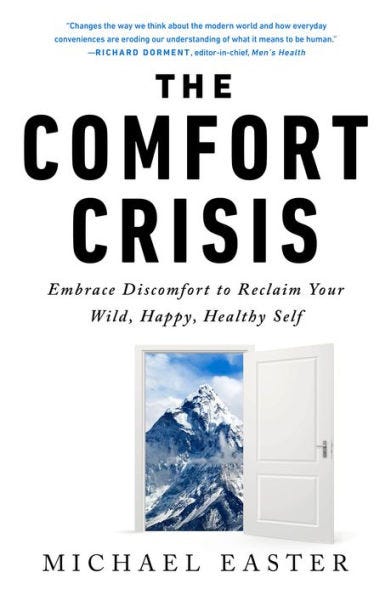
A book about how our modern world has made us too comfortable for our own good. And how voluntarily stepping into discomfort—including thinking about death—can lead to a more resilient, more meaningful life.
Until next time,
Karl